Projects
My work combines mathematical modelling, optimisation and scientific computing to solve complex physical and operational problems. The projects below show how these methods translate into faster simulation, better resource allocation and more reliable computational tools.
A central theme is coupling — combining different models, methods, or system components so each part is solved in the most effective way. This approach is particularly powerful in applications where standard methods become too slow, too expensive, or fail to scale.
Virus and Molecular Simulations
Biomolecular physics · Drug discovery · Computational chemistry
Accurate molecular simulation is essential in applications such as drug discovery, but standard approaches can become inaccurate or computationally expensive for complex or highly charged systems. I develop coupled numerical methods that improve both accuracy and computational efficiency, including nonlinear electrostatic models and automated solver strategies.

Impact:
-
More accurate models for difficult molecular systems
-
Automated nonlinear solver behaviour
-
Scalable computational pipelines
Impact:
-
Resource allocation under constraints
-
Cost and resilience trade-offs
-
Decision support for complex infrastructure systems
Optimising Water Supply
Infrastructure · Sustainability · Operations optimisation
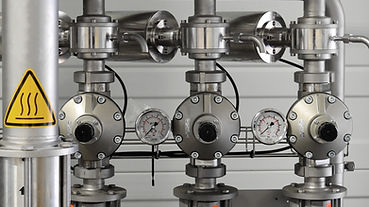
Water infrastructure systems are complex and costly to operate, with constant pressure to improve efficiency without compromising reliability or service quality. This project applies mathematical modelling and optimisation to water distribution and resource allocation across supply networks, with the aim of supporting better network-wide decisions on cost, efficiency and resilience.
Coupled FEM–BEM
Multi-physics simulation · Engineering software
Complex systems often involve different physical domains or mathematical models that are best solved with different numerical techniques. This work develops flexible coupling methods that allow each component to use the most appropriate solver while remaining part of one consistent computational framework.


Fast Solvers for Isogeometric Analysis
CAD-integrated simulation · Manufacturing
Integrating high-fidelity simulation directly into engineering design workflows can make repeated computation prohibitively expensive. I developed domain-decomposition solvers for multi-patch isogeometric analysis that substantially reduce computational cost while retaining high-order accuracy.
Impact:
-
Modular multiphysics simulation
-
Efficient coupling of different numerical methods
-
Reusable computational frameworks for complex systems
Impact:
-
Faster design-to-simulation cycles
-
More efficient high-accuracy computation
-
Greater scalability for CAD-integrated simulation
Parallel Solvers for Fluid Flow
Fluid dynamics · High-performance computing
Large fluid simulations quickly become limited by solver cost as the problem size and number of subdomains increase. My work develops scalable domain-decomposition and preconditioning strategies for incompressible flow, designed to retain efficiency as computations grow.

Impact:
-
Improved scalability for large systems
-
Efficient use of parallel computing resources
-
Reduced solver bottlenecks